
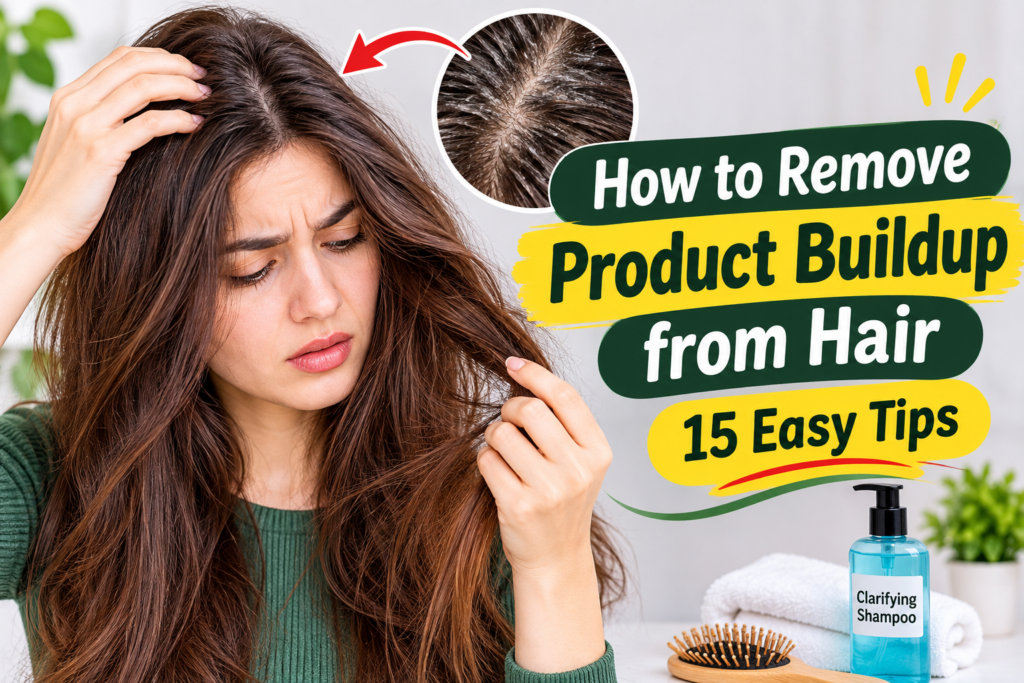
How to Remove Product Buildup from Hair: 15 Easy and Effective Ways to Get Clean, Healthy Hair
Table of Contents
Product buildup is a common hair problem that can make your hair look greasy, dull, heavy, and difficult to manage. Even if you wash your hair regularly, you may still notice that it does not feel completely clean. Your shampoo may stop producing enough foam, your hair may look flat, and your scalp may feel uncomfortable. These problems can happen when hair products, natural oils, dead skin cells, and dirt accumulate on your scalp and hair strands.
Learning how to remove product buildup from hair can help restore its natural shine, softness, and volume. The good news is that you do not always need expensive salon treatments to deal with this issue. With the right shampoo, proper washing techniques, and a few simple changes to your hair care routine, you can keep your hair fresh and healthy.
In this guide, you will learn what causes product buildup, how to recognize its signs, and 15 effective ways to remove it safely at home.
What Is Product Buildup in Hair?
Product buildup happens when hair care products and other substances collect on your scalp and hair over time. These substances may include shampoo residue, conditioner, hair oils, leave-in treatments, styling creams, gels, mousses, and hairsprays.
Although these products are designed to improve the appearance of your hair, using too much of them or not washing them out properly can leave a layer of residue.
This residue can make your hair feel sticky, greasy, or unusually heavy. It may also prevent moisture from reaching your hair properly, making your strands appear dry even when you regularly use conditioner.
Product buildup can affect every hair type, including straight, wavy, curly, and coily hair. However, people who frequently use styling products or heavy oils may experience it more often.
What Causes Product Buildup in Hair?
Understanding the causes of product buildup is the first step toward preventing it. Several everyday hair care habits can contribute to this problem.
1. Using Too Many Hair Products
Using several products at once can leave unnecessary residue on your hair. For example, applying leave-in conditioner, hair cream, serum, oil, and styling gel together may create layers of product that are difficult to remove with regular shampoo.
2. Applying Too Much Hair Oil
Hair oils can help reduce dryness and improve softness. However, applying large amounts of oil regularly may cause greasy residue, especially if you do not wash your hair thoroughly.
3. Not Washing Hair Properly
Sometimes, product buildup happens because shampoo is not distributed evenly. Quickly washing your hair without massaging your scalp or rinsing completely may leave behind product residue.
4. Using Heavy Conditioners
Thick conditioners and moisturizing masks can sometimes weigh down fine hair. Applying conditioner directly to your scalp may also contribute to an oily feeling.
5. Using Hard Water
Hard water contains minerals such as calcium and magnesium. These minerals can interact with certain hair products and leave deposits on the hair, making it feel rough or dull.
6. Frequent Use of Styling Products
Hair sprays, gels, waxes, dry shampoos, and styling creams can accumulate over time. If you use these products regularly, occasional clarifying may be helpful.
Signs You Have Product Buildup in Your Hair
Not every greasy or dull hair problem is caused by product buildup. However, certain signs can help you recognize it.
Common signs include:
- Hair feels greasy shortly after washing.
- Your strands look dull and lack natural shine.
- Hair feels sticky, waxy, or coated.
- Your scalp feels uncomfortable or itchy.
- Hair becomes flat and loses its natural volume.
- Shampoo does not spread or lather as easily as usual.
- Styling products do not work as effectively.
- Your hair feels heavy even after conditioning.
If you notice several of these signs, product buildup may be one possible reason.
However, persistent itching, redness, flakes, or scalp irritation can also indicate dandruff, dermatitis, or another scalp condition.
How to Remove Product Buildup from Hair: 15 Effective Methods
Removing product buildup does not require complicated treatments. The following methods can help clean your scalp and hair without unnecessarily damaging your strands.
1. Use a Clarifying Shampoo
One of the easiest ways to remove product buildup from hair is by using a clarifying shampoo.
Clarifying shampoos are specially designed to remove excess oils, styling products, and residue that regular shampoos may not completely remove.
Unlike everyday shampoos, clarifying formulas usually provide a deeper cleanse. They can be especially helpful if you regularly use hair sprays, gels, serums, and leave-in conditioners.
How to use it:
- Wet your hair completely with lukewarm water.
- Apply a small amount of clarifying shampoo.
- Gently massage your scalp using your fingertips.
- Work the shampoo through your hair.
- Rinse thoroughly with clean water.
- Follow with a moisturizing conditioner.
You do not need to use clarifying shampoo every day. For many people, once every two to four weeks is a reasonable starting point, depending on hair type and product use.
If your hair is dry, colored, curly, or chemically treated, choose a gentle formula and clarify less frequently.
2. Wash Your Hair Twice When Necessary
Sometimes, one shampoo wash is not enough to remove heavy styling products and excess oil.
A double cleanse can help when your hair has accumulated a significant amount of residue.
During the first wash, shampoo helps loosen surface oils and styling products. The second wash can clean the scalp more thoroughly.
How to do it:
- Wet your hair completely.
- Apply a small amount of regular shampoo.
- Massage gently and rinse.
- Apply shampoo again if your hair still feels coated.
- Rinse thoroughly.
- Apply conditioner to the mid-lengths and ends.
Avoid automatically shampooing twice every time you wash your hair. One wash is often enough for everyday cleaning.
3. Use a Shampoo Designed for Your Hair Type
Choosing the right shampoo makes a big difference when dealing with buildup.
A shampoo that is too heavy may leave fine hair looking flat. On the other hand, a very strong shampoo may remove too much moisture from dry or curly hair.
Look for a formula that matches your needs.
For example:
- Fine hair: Lightweight cleansing shampoo.
- Oily hair: Gentle shampoo designed for excess oil.
- Curly hair: Moisturizing shampoo with occasional clarifying.
- Dry hair: Gentle, hydrating shampoo.
- Color-treated hair: Color-safe clarifying products when needed.
The right shampoo can help keep your scalp clean without making your hair unnecessarily dry.
4. Rinse Your Hair Thoroughly
One simple but often overlooked way to prevent product buildup is rinsing your hair properly.
Conditioners, shampoos, masks, and styling treatments can leave residue if they are not washed out completely.
Spend enough time rinsing your scalp and hair, especially around the back of your head, behind your ears, and near your neckline.
Use lukewarm water instead of very hot water because excessive heat can make hair feel drier.
Remember that proper rinsing is just as important as choosing good hair products.
5. Avoid Applying Conditioner to Your Scalp
Conditioner helps soften and moisturize hair, but applying too much near the roots can make some hair types look greasy.
This is especially common for people with fine hair or naturally oily scalps.
Instead, focus on applying conditioner to the middle and lower sections of your hair.
Follow these simple steps:
- Wash your hair with shampoo.
- Gently squeeze out excess water.
- Apply conditioner from the middle to the ends.
- Leave it on according to the product instructions.
- Rinse thoroughly.
If you have very dry or tightly coiled hair, your scalp and hair care needs may be different. Choose products according to your individual hair type.
6. Try a Chelating Shampoo for Hard Water Deposits
If you live in an area with hard water, minerals may accumulate on your hair over time.
This buildup can make your hair feel rough, dull, and difficult to manage.
A chelating shampoo is designed to help remove mineral deposits and certain metal residues.
Some formulas contain ingredients such as EDTA or other chelating agents.
How to use it:
- Choose a chelating shampoo suitable for your hair type.
- Follow the instructions on its packaging.
- Rinse thoroughly.
- Apply a moisturizing conditioner afterward.
Clarifying and chelating shampoos are not exactly the same. Clarifying products mainly target oils and styling residue, while chelating products are particularly useful for mineral deposits.
7. Reduce the Use of Heavy Hair Oils
Hair oils can be beneficial when used correctly, but excessive application may contribute to buildup.
Products such as coconut oil, castor oil, and thick hair blends can leave a coating when applied frequently or in large amounts.
If your hair feels greasy even after washing, consider reducing the amount of oil you use.
Try these habits:
- Use only a small amount of oil.
- Avoid applying heavy oils directly to your scalp if they cause irritation or greasiness.
- Wash out oil treatments properly.
- Choose lightweight products if you have fine hair.
You do not need to stop using hair oils completely. The goal is to use them in moderation.
8. Use a Scalp Brush Gently
A scalp brush can help distribute shampoo and loosen some surface residue during washing.
It may also make shampooing easier if you have thick or long hair.
However, using too much pressure can irritate your scalp.
How to use a scalp brush:
- Wet your hair thoroughly.
- Apply shampoo to your scalp.
- Use a soft silicone scalp brush.
- Move it gently in small circular motions.
- Rinse your hair completely.
Avoid aggressive scrubbing, especially if your scalp is sensitive, inflamed, or scratched.
Your fingertips are also perfectly suitable for cleaning your scalp.
9. Avoid Excessive Dry Shampoo
Dry shampoo is useful when you want to refresh your hair between washes. It absorbs excess oil and helps improve the appearance of greasy roots.
However, frequent use without regular washing can leave powder and product residue on your scalp.
To prevent buildup, use dry shampoo occasionally rather than relying on it every day.
Helpful tips:
- Apply only a small amount.
- Follow the product’s instructions.
- Avoid repeatedly layering it over old applications.
- Wash your hair regularly.
- Do not use it as a permanent replacement for shampoo.
If dry shampoo causes itching or irritation, discontinue it.
10. Use an Apple Cider Vinegar Rinse Carefully
Apple cider vinegar is a popular home remedy for hair care. Some people use diluted vinegar rinses to help remove light residue and improve the feel of their hair.
However, there is limited scientific evidence that apple cider vinegar removes product buildup better than a properly formulated clarifying shampoo.
Undiluted vinegar can irritate the scalp and damage the skin barrier.
If you choose to try it, use a commercially formulated hair rinse or follow a reputable product’s dilution instructions. Avoid applying concentrated vinegar directly to your scalp.
Do not use vinegar on irritated, broken, or sensitive skin.
For most people, a clarifying shampoo is a more predictable option.
11. Clean Your Hairbrushes and Combs
Your hairbrushes and combs can collect oil, dead skin cells, dust, and old styling products.
Using dirty brushes may transfer some of that residue back onto freshly washed hair.
Cleaning your hair tools regularly can support a cleaner hair care routine.
How to clean them:
- Remove loose hair from the brush.
- Prepare warm water with a little gentle shampoo.
- Wash the bristles carefully.
- Rinse away the soap.
- Allow the brush to dry completely before using it again.
Avoid soaking wooden brushes or tools that may be damaged by water.
12. Choose Lightweight Styling Products
Heavy styling products can contribute to buildup, particularly when several are used together.
If you regularly use gels, creams, serums, waxes, or leave-in conditioners, consider switching to lightweight alternatives.
Look for products that suit your hair texture and styling needs.
For example, someone with fine hair may benefit from a lightweight mousse instead of a thick styling cream.
People with thick or curly hair may prefer richer products, but should still avoid applying more than necessary.
Using fewer products can make your hair easier to clean and manage.
13. Apply Hair Masks in Moderation
Hair masks can help improve softness and reduce dryness. However, using thick masks too frequently may leave some hair types feeling heavy.
Instead of applying a mask every day, follow the product instructions and use it according to your hair’s needs.
For most people, once a week or less is sufficient, although some products have different recommended schedules.
Apply the mask mainly to the lengths and ends unless the product is specifically designed for scalp use.
Always rinse it out properly.
14. Maintain a Regular Hair Washing Schedule
Washing your hair regularly helps remove excess oil, sweat, dirt, and styling residue.
However, the ideal washing schedule depends on your scalp, hair texture, activity level, and product use.
For example:
- Oily scalp: May need more frequent washing.
- Dry hair: May benefit from less frequent washing.
- Curly hair: Often needs a gentler washing routine.
- Fine hair: May require more regular cleansing.
- Active lifestyle: Washing may be needed more often after sweating.
There is no single washing schedule that works for everyone.
Pay attention to how your scalp feels instead of following a strict routine that does not suit your hair.
15. Use a Moisturizing Conditioner After Clarifying
Clarifying shampoos can remove residue effectively, but some formulas may leave hair feeling dry.
Using a moisturizing conditioner afterward helps improve softness and manageability.
Choose a conditioner that matches your hair type.
Apply it mainly to the middle and ends of your hair, leave it on as directed, and rinse properly.
If your hair is particularly dry, you can also use a suitable leave-in conditioner after washing.
The key is to balance cleansing with moisture rather than using strong cleansing products too frequently.
How to Remove Product Buildup from Hair Naturally
If you prefer a simple hair care routine, there are a few gentle habits that can help reduce residue without relying on complicated treatments.
Consider the following:
Use lukewarm water: Rinsing your hair properly helps remove loose residue and product remnants.
Reduce styling products: Using fewer products makes it easier to keep your hair clean.
Choose gentle shampoos: A suitable shampoo can clean your scalp without unnecessary dryness.
Avoid excessive oiling: Applying too much oil can make your hair greasy and difficult to wash.
Clean hair tools: Regularly washing brushes and combs prevents old residue from transferring to your hair.
It is important to remember that natural ingredients are not automatically safer or more effective. Lemon juice, baking soda, and undiluted vinegar can irritate your scalp. Avoid using harsh kitchen ingredients as DIY clarifying treatments.
How Often Should You Remove Product Buildup from Hair?
The frequency of clarifying depends on how much product you use and how your scalp responds.
Here is a general guide:
| Hair type or routine | Suggested starting point |
|---|---|
| Fine hair | Every 2–4 weeks |
| Oily hair | Every 1–3 weeks if needed |
| Curly hair | Every 3–6 weeks |
| Dry hair | Every 4–6 weeks or less often |
| Frequent styling product use | Every 2–4 weeks |
| Color-treated hair | Use a suitable gentle formula occasionally |
These are general suggestions, not strict rules. Always follow the shampoo’s instructions and adjust based on your hair’s condition.
If your hair starts feeling dry or rough after clarifying, reduce the frequency.
Common Mistakes to Avoid When Removing Product Buildup
While trying to get rid of buildup, some people accidentally make their hair problems worse.
Here are common mistakes to avoid.
Using Clarifying Shampoo Too Frequently
Clarifying shampoo is useful, but overusing it may strip away too much natural oil and leave hair dry.
Use it only when needed.
Scrubbing the Scalp Too Hard
Aggressive scrubbing can cause irritation and discomfort. Massage your scalp gently using your fingertips or a soft brush.
Applying Too Many DIY Treatments
Mixing baking soda, lemon juice, vinegar, and other ingredients is not a safe shortcut to clean hair.
Some ingredients can disrupt the scalp’s natural barrier and cause irritation.
Ignoring Conditioner
Removing buildup does not mean you should stop moisturizing your hair.
A suitable conditioner helps maintain softness and manageability.
Using Products Without Checking Ingredients
Some products may contain ingredients that are too heavy for your hair type.
Read product labels and choose formulas based on your hair’s needs.
How to Prevent Product Buildup in the Future
Once you have removed existing buildup, a few simple habits can help prevent it from returning.
- Use only the amount of shampoo and conditioner you need.
- Avoid layering too many styling products.
- Rinse shampoo and conditioner completely.
- Choose lightweight formulas if your hair becomes greasy easily.
- Clean your brushes and combs regularly.
- Avoid excessive use of dry shampoo.
- Use clarifying shampoo when necessary.
- Follow a washing schedule that suits your scalp.
- Apply heavy hair masks and oils in moderation.
These small changes can make your regular hair care routine easier and more effective.
When Should You See a Dermatologist?
Product buildup is usually manageable with proper hair care. However, not every scalp problem is caused by product residue.
If you experience persistent itching, redness, burning, thick flakes, painful bumps, or unusual hair loss, consider consulting a dermatologist.
You should also seek professional advice if your scalp symptoms continue even after changing your hair care products.
A dermatologist can help determine whether the problem is related to dandruff, seborrheic dermatitis, contact irritation, psoriasis, or another scalp condition.
Avoid repeatedly using strong clarifying products when your scalp is already irritated.
Frequently Asked Questions (FAQs)
1. What is the fastest way to remove product buildup from hair?
Using a suitable clarifying shampoo is generally one of the fastest ways to remove styling residue, excess oil, and product buildup. Massage it gently into your scalp, rinse thoroughly, and follow with conditioner.
2. Can regular shampoo remove product buildup?
Regular shampoo can remove everyday dirt and oil. However, heavy styling products and accumulated residue may require a clarifying shampoo for more effective cleaning.
3. Does product buildup cause hair loss?
Product buildup does not usually directly cause permanent hair loss. However, heavy residue and irritating products may contribute to scalp discomfort. Persistent shedding or hair loss should be evaluated by a dermatologist.
4. Can I remove product buildup without clarifying shampoo?
Yes. You can reduce buildup by washing your hair properly, avoiding excessive styling products, rinsing thoroughly, and using a suitable regular shampoo. However, heavy buildup may require a clarifying formula.
5. Is apple cider vinegar good for removing hair buildup?
Apple cider vinegar is a popular home remedy, but scientific evidence supporting its effectiveness for removing product buildup is limited. Undiluted vinegar may irritate your scalp, so a properly formulated clarifying shampoo is generally a better choice.
6. How do I know if my hair has product buildup or is just oily?
Product buildup may make hair feel waxy, coated, sticky, or unusually heavy. Oily hair usually feels greasy because of excess natural sebum. Both problems can occur together.
7. Can product buildup make hair look dull?
Yes. A layer of styling residue, oils, and mineral deposits can make hair appear dull and reduce its natural shine.
8. Should I condition my hair after clarifying shampoo?
Yes. Many clarifying shampoos can leave hair feeling dry. Applying a suitable conditioner afterward helps restore softness and makes hair easier to manage.
Conclusion
Learning how to remove product buildup from hair is an important part of maintaining a healthy hair care routine. Excessive styling products, heavy oils, conditioner residue, and hard water minerals can make your hair look dull, greasy, and lifeless.
Fortunately, you can manage most product buildup problems with a few simple changes. Use a suitable clarifying shampoo when necessary, rinse your hair thoroughly, avoid applying too many products, and keep your hair tools clean.
Remember that healthy hair does not require dozens of expensive products. A simple routine, the right shampoo, and consistent care can help your hair stay clean, soft, shiny, and manageable.
The most important thing is to understand your hair type and choose products that meet its needs. With the right approach, you can reduce buildup and enjoy fresher-looking hair without unnecessary treatments.
Note: Article ko natural aur reader-friendly rakha gaya hai. Is mein unsafe DIY treatments ko avoid karne ki guidance bhi shamil hai.
REad Next
Pingback: How to Keep Hair Hydrated: 15 Easy Tips for Healthy Hair