
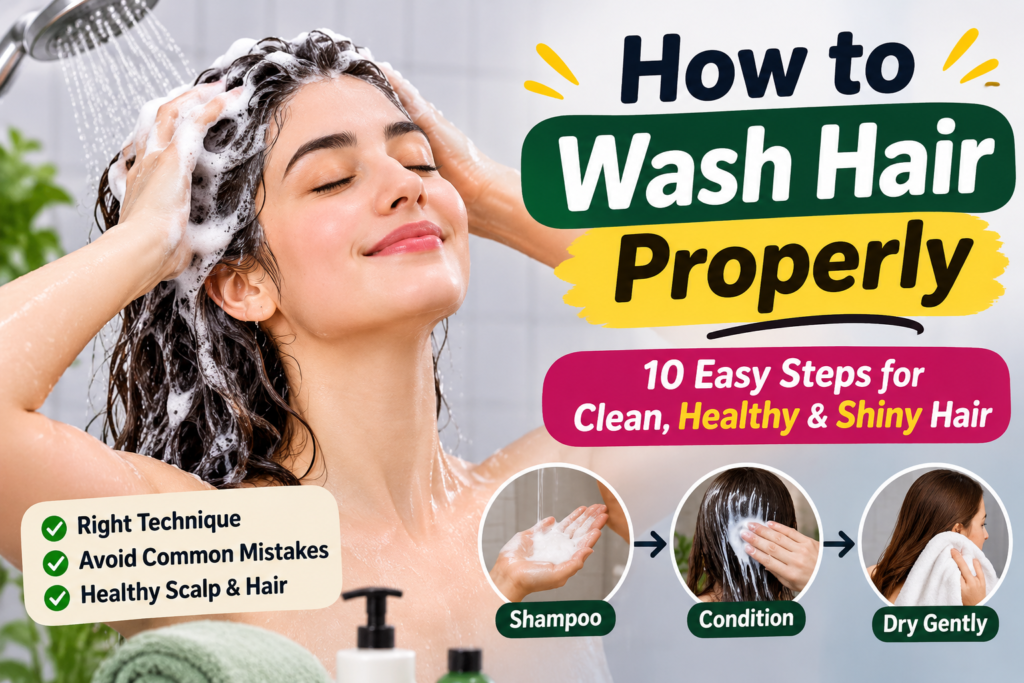
How to Wash Hair Properly: 10 Easy Steps for Clean, Healthy, and Shiny Hair
Table of Contents
Washing your hair may seem like one of the simplest parts of your daily beauty routine, but doing it incorrectly can lead to dryness, frizz, tangles, and unnecessary hair breakage. Many people focus on buying expensive shampoos and conditioners without realizing that the way they wash their hair also plays an important role in keeping it healthy.
Learning how to wash hair properly can make a noticeable difference in the appearance and feel of your hair. The right washing technique helps remove dirt, excess oil, sweat, and product buildup while keeping your scalp comfortable and your hair manageable.
Whether you have straight, curly, wavy, oily, dry, or color-treated hair, following a suitable washing routine can help you maintain cleaner and healthier-looking hair.
In this guide, you will learn how to wash your hair properly, how often you should shampoo, which mistakes to avoid, and how to choose products according to your hair type.
Why Is It Important to Wash Your Hair Properly?
Your scalp naturally produces an oil called sebum. This oil helps protect your scalp and keeps your hair from becoming excessively dry. However, too much oil can mix with sweat, dead skin cells, dirt, and styling products.
When these substances accumulate, your scalp may feel greasy, uncomfortable, or itchy.
Proper hair washing helps remove unwanted buildup and keeps the scalp clean. It also makes your hair feel fresher and easier to style.
Some important benefits of washing your hair correctly include:
- Removes excess oil and dirt from the scalp.
- Helps reduce product buildup.
- Keeps hair feeling fresh and clean.
- Makes hair easier to comb and manage.
- Helps prevent unnecessary tangling during washing.
- Allows conditioner to work more effectively.
- Supports a comfortable and healthy scalp environment.
Remember that washing your hair is not about making it completely free of natural oils. The goal is to clean your scalp and hair without stripping away too much moisture.
How to Wash Hair Properly: 10 Easy Steps
Following the correct washing process does not require expensive products or complicated techniques. A few simple changes can make your hair-washing routine more effective.
Here are ten easy steps to follow.
1. Choose the Right Shampoo for Your Hair Type
The first step is choosing a shampoo that suits your hair and scalp.
Not every shampoo works for everyone. Some products are designed for oily scalps, while others are made for dry, curly, damaged, or color-treated hair.
If you have an oily scalp, consider a gentle shampoo that removes excess oil without leaving your hair feeling overly dry.
For dry hair, look for moisturizing ingredients that help improve softness and manageability.
If your hair is curly, a moisturizing shampoo may help reduce dryness and make your curls easier to manage.
For color-treated hair, choose a shampoo labeled as suitable for colored hair.
Before buying a product, check its ingredients and avoid anything that consistently causes irritation or discomfort.
The best shampoo is one that cleans your scalp effectively while leaving your hair comfortable.
2. Brush or Detangle Your Hair Before Washing
Before stepping into the shower, gently detangle your hair.
Hair can become more vulnerable to stretching and breakage when wet, especially if it is already damaged or tangled.
Use a wide-tooth comb or a suitable detangling brush. Start from the ends and gradually work toward the roots.
Avoid pulling or forcing the comb through stubborn knots.
If you have curly or tightly textured hair, you may prefer gently detangling it with your fingers or a wide-tooth comb before washing.
You do not need to brush your hair aggressively. The purpose is simply to remove major tangles and make the washing process easier.
3. Rinse Your Hair With Lukewarm Water
Before applying shampoo, thoroughly wet your hair using lukewarm water.
This helps loosen surface dirt, sweat, and styling product residue. It also prepares your scalp and hair for shampooing.
Avoid extremely hot water because it may increase dryness and irritation, particularly if your scalp is already sensitive.
Very cold water is not necessary either.
Lukewarm water is generally a comfortable choice for most people.
Make sure your hair is completely wet before applying shampoo. This helps distribute the product more evenly and makes it easier to massage your scalp.
4. Apply Shampoo to Your Scalp
One of the most common hair-washing mistakes is applying too much shampoo directly to the entire length of the hair.
In most cases, your scalp needs the most attention because this is where oil, sweat, and product buildup accumulate.
Take a small amount of shampoo in your palm and spread it between your hands.
Apply it mainly to your scalp, including the top, sides, and back of your head.
You can adjust the amount depending on your hair length, thickness, and the product instructions.
Avoid using excessive shampoo because more product does not necessarily mean cleaner hair.
If your hair is particularly oily or has significant styling product buildup, a second gentle shampoo may sometimes be helpful.
5. Massage Your Scalp Gently
Once you apply shampoo, gently massage your scalp using your fingertips.
Move your fingers in small circular motions across your scalp. Pay attention to areas around your hairline, behind your ears, and the back of your head.
Do not scratch your scalp with your fingernails.
Scratching aggressively can irritate the skin and cause discomfort.
A gentle massage helps distribute shampoo and loosen oil and buildup.
Spend approximately 30 to 60 seconds massaging your scalp, adjusting the time according to your needs.
You do not need to rub your hair strands together. This can create friction, tangles, and breakage.
Focus on cleaning the scalp rather than scrubbing the lengths of your hair.
6. Rinse Your Hair Thoroughly
After shampooing, rinse your hair completely with lukewarm water.
Make sure there is no shampoo left around your hairline, behind your ears, or at the back of your head.
Leftover shampoo can sometimes contribute to irritation or make hair feel unpleasant.
Use your fingers to gently separate sections of hair so water can reach the scalp.
Long or thick hair may need additional rinsing time.
Do not rush this step. Proper rinsing is an important part of learning how to wash hair properly.
Your hair should feel clean without having a slippery shampoo residue.
7. Apply Conditioner to the Hair Lengths
Conditioner is an important part of a good hair-washing routine.
While shampoo mainly cleans your scalp, conditioner helps improve the softness and manageability of your hair.
After rinsing out your shampoo, gently squeeze excess water from your hair.
Apply conditioner mainly to the middle lengths and ends.
If you have an oily scalp, avoid applying heavy conditioner directly to your roots unless the product instructions recommend it.
Leave the conditioner on for the time suggested on its packaging.
This is usually a short period, but some products require longer.
Conditioner helps reduce friction between hair strands, making detangling easier and reducing the risk of mechanical breakage.
Choose a lightweight formula if your hair gets greasy easily. If your hair is dry, thick, or curly, a richer conditioner may work better.
8. Detangle Your Hair Carefully
If your hair becomes tangled after shampooing, use conditioner to help make detangling easier.
A wide-tooth comb is a useful option for many hair types.
Start at the ends and slowly work upward.
Avoid pulling through knots because wet hair can stretch and break more easily.
If you have curly hair, you can gently detangle it with your fingers while conditioner is still in your hair.
Do not rush the process.
Being patient while detangling can help reduce unnecessary breakage and keep your hair looking smoother.
9. Rinse Out the Conditioner Properly
Once the conditioner has had enough time to work, rinse it out according to the product instructions.
Use lukewarm water and make sure excess product is removed.
You do not need to use ice-cold water to make your hair shiny. Gentle handling and suitable conditioning products are more important.
If your hair is naturally dry, follow the instructions of your particular conditioner rather than trying to leave large amounts of regular rinse-out conditioner in your hair.
After rinsing, your hair should feel soft and manageable.
10. Dry Your Hair Gently
The final step is drying your hair without causing unnecessary damage.
Avoid rubbing your hair aggressively with a regular towel.
Instead, gently squeeze out excess water using your hands.
Use a soft microfiber towel or a clean cotton T-shirt to absorb additional moisture.
If you prefer air-drying, allow your hair to dry naturally in a comfortable environment.
If you use a hair dryer, choose a low or medium heat setting and keep the dryer at a reasonable distance from your hair.
Applying a suitable heat protectant before using hot styling tools can also help reduce heat-related damage.
Avoid sleeping with soaking-wet hair, especially if your hair becomes tangled easily.
How Often Should You Wash Your Hair?
There is no single washing schedule that works for everyone.
How frequently you should wash your hair depends on your scalp condition, hair texture, activity level, environment, and personal preferences.
Some people need to shampoo daily, while others are comfortable washing their hair two or three times a week.
Here is a general guide:
Oily Hair
If your scalp becomes greasy quickly, you may need to wash your hair more frequently.
Daily shampooing can be appropriate for some people with oily scalps, particularly when using a gentle shampoo.
Do not feel that you must avoid washing your hair simply because someone recommends washing less frequently.
Dry Hair
Dry hair often benefits from less frequent washing, depending on scalp condition.
You may find that washing two or three times a week works well.
Use a moisturizing shampoo and conditioner to help maintain softness.
Curly Hair
Curly hair often tends to feel drier because natural scalp oils do not travel down the hair shaft as easily.
Many people with curly hair prefer washing less frequently and using moisturizing products.
However, the scalp still needs regular cleansing.
Fine Hair
Fine hair can become oily more quickly because sebum spreads along the hair shaft more easily.
You may need to wash it more frequently than someone with thick or coarse hair.
A lightweight shampoo and conditioner can help prevent your hair from feeling weighed down.
Thick Hair
Thick hair may not become greasy as quickly, but washing frequency still depends on the scalp.
Make sure you rinse shampoo and conditioner thoroughly because product can become trapped in dense hair.
Common Hair-Washing Mistakes You Should Avoid
Even if you use good-quality shampoo and conditioner, certain habits can make your hair-washing routine less effective.
Here are some common mistakes to avoid.
Using Very Hot Water
Hot showers may feel relaxing, but excessively hot water can increase dryness and irritation.
Use lukewarm water instead.
Applying Too Much Shampoo
Using more shampoo does not automatically make your hair cleaner.
Start with a small amount and add more only when necessary.
Scrubbing Your Hair Aggressively
Rubbing your hair strands together can increase friction and tangling.
Massage your scalp gently and let the shampoo rinse through the lengths.
Skipping Conditioner
Shampoo cleans your scalp, while conditioner helps improve hair softness and manageability.
Skipping conditioner may make dry or damaged hair more difficult to detangle.
Washing Your Hair Too Infrequently
Avoiding shampoo for too long can allow oil, sweat, dead skin cells, and styling products to accumulate.
Choose a washing schedule that keeps your scalp comfortable and clean.
Not Rinsing Properly
Leaving shampoo or conditioner in your hair can make it feel heavy or uncomfortable.
Take enough time to rinse your hair thoroughly.
Rubbing With a Rough Towel
Aggressive towel-drying can increase friction and contribute to breakage.
Use a soft towel and gently squeeze out water instead.
How to Wash Different Hair Types Properly
Different hair types have different needs. Adjusting your routine can help you get better results.
How to Wash Straight Hair
Straight hair can show oiliness more quickly because natural oils travel easily down the strands.
Use a suitable shampoo and focus on cleansing the scalp.
Choose a lightweight conditioner and apply it mainly to the ends.
Avoid using too many heavy styling products if your hair becomes flat easily.
How to Wash Curly Hair
Curly hair often needs extra moisture and gentle handling.
Use a moisturizing shampoo that suits your scalp and hair needs.
Apply conditioner generously to the lengths and ends.
Detangle gently while your hair is conditioned.
Avoid rough towel-drying because it can disturb curl patterns and create frizz.
How to Wash Wavy Hair
Wavy hair can become frizzy or weighed down by heavy products.
Choose a balanced shampoo and a lightweight conditioner.
Avoid excessive rubbing and use a soft towel to remove water.
You can use a suitable leave-in conditioner if your hair needs additional moisture.
How to Wash Dry and Damaged Hair
Dry or damaged hair needs gentle handling.
Choose a mild shampoo and a moisturizing conditioner.
Avoid excessive shampooing if it makes your hair feel drier.
Use a deep-conditioning treatment occasionally if your hair benefits from it.
Limit excessive heat styling and chemical treatments.
How to Wash Oily Hair
If your scalp becomes oily quickly, focus shampoo on your scalp rather than your ends.
You may need to wash more frequently.
Choose a shampoo designed for oily hair and avoid applying heavy conditioners directly to the roots.
Remember that an oily scalp does not mean you should aggressively scrub your hair.
Should You Shampoo Twice?
You may have heard that shampooing twice is necessary for cleaner hair.
However, double shampooing is not essential for everyone.
One wash is usually enough when your hair is washed regularly and does not have much product buildup.
A second wash may be helpful when:
- Your scalp is particularly oily.
- You have used several styling products.
- Your hair has noticeable product buildup.
- Your first shampoo did not remove enough oil and dirt.
If you shampoo twice, use a gentle approach.
Avoid repeatedly washing your hair if it leaves your scalp feeling dry, tight, or irritated.
Tips for Keeping Your Hair Healthy After Washing
Your hair-care routine should not end when you turn off the shower.
How you treat your hair afterward can also affect its appearance and manageability.
Here are some useful tips:
- Use a soft microfiber towel to absorb excess water.
- Avoid brushing wet hair aggressively.
- Apply a suitable leave-in conditioner if your hair needs extra moisture.
- Use heat protectant before heat styling.
- Avoid tight hairstyles while your hair is wet.
- Keep your comb and brushes clean.
- Use products that suit your hair type.
- Trim damaged ends when needed.
- Avoid excessive heat and chemical treatments.
- Maintain a balanced hair-care routine.
Consistency is more important than using a large number of products.
A simple routine with suitable shampoo, conditioner, and gentle drying techniques can be enough for many people.
Frequently Asked Questions About Washing Hair
1. What is the correct way to wash your hair?
The correct way to wash your hair is to wet it with lukewarm water, apply shampoo to your scalp, massage gently with your fingertips, rinse thoroughly, apply conditioner to the lengths and ends, and dry your hair carefully.
2. Should I shampoo my hair twice?
Not necessarily. One shampoo is usually enough for regular washing. A second wash may help if your scalp is very oily or you have significant styling product buildup.
3. Is it better to wash hair with hot or cold water?
Lukewarm water is generally the best choice. Very hot water may increase dryness and irritation, while cold water is not necessary for effective cleansing.
4. How many times a week should I wash my hair?
It depends on your scalp and hair type. Some people need daily washing, while others prefer two or three washes per week. Choose a schedule that keeps your scalp clean and comfortable.
5. Should I apply shampoo to my hair ends?
In most cases, shampoo should mainly be applied to the scalp. The lengths and ends are generally cleaned by the shampoo running through them during rinsing.
6. Can I wash my hair every day?
Yes, daily washing can be suitable for people with oily scalps or those who sweat frequently. Use a gentle shampoo and adjust the routine if your hair becomes dry or irritated.
7. Should I use conditioner after every shampoo?
Using conditioner after shampooing is helpful for most hair types because it improves softness and manageability. Apply it mainly to the lengths and ends.
8. Why does my hair feel dry after washing?
Your hair may feel dry because of harsh shampoo, excessive washing, hot water, heat styling, or existing hair damage. Try a gentler shampoo and a suitable moisturizing conditioner.
9. Is it okay to brush wet hair?
Wet hair can be more vulnerable to stretching and breakage. If you need to detangle it, use a wide-tooth comb and work gently from the ends upward.
10. How long should I leave shampoo in my hair?
Most regular shampoos only need gentle massaging into the scalp before rinsing. Follow the instructions on your particular product rather than leaving shampoo in your hair unnecessarily.
Final Thoughts
Learning how to wash hair properly is an important part of maintaining clean, manageable, and healthy-looking hair. Although washing may seem like a basic activity, using the right products and techniques can make your routine much more effective.
Start by choosing a shampoo that suits your scalp, wetting your hair with lukewarm water, and gently massaging your scalp with your fingertips. Rinse thoroughly, apply conditioner to your lengths and ends, and dry your hair without excessive rubbing.
Remember that every hair type is different. What works for oily hair may not work for dry or curly hair.
You do not need an expensive collection of products to take good care of your hair. A consistent routine, gentle handling, and suitable hair-care products can help you maintain beautiful, soft, and manageable hair over time.
REad Next
Pingback: How Often Should You Wash Your Hair? 7 Best Tips